

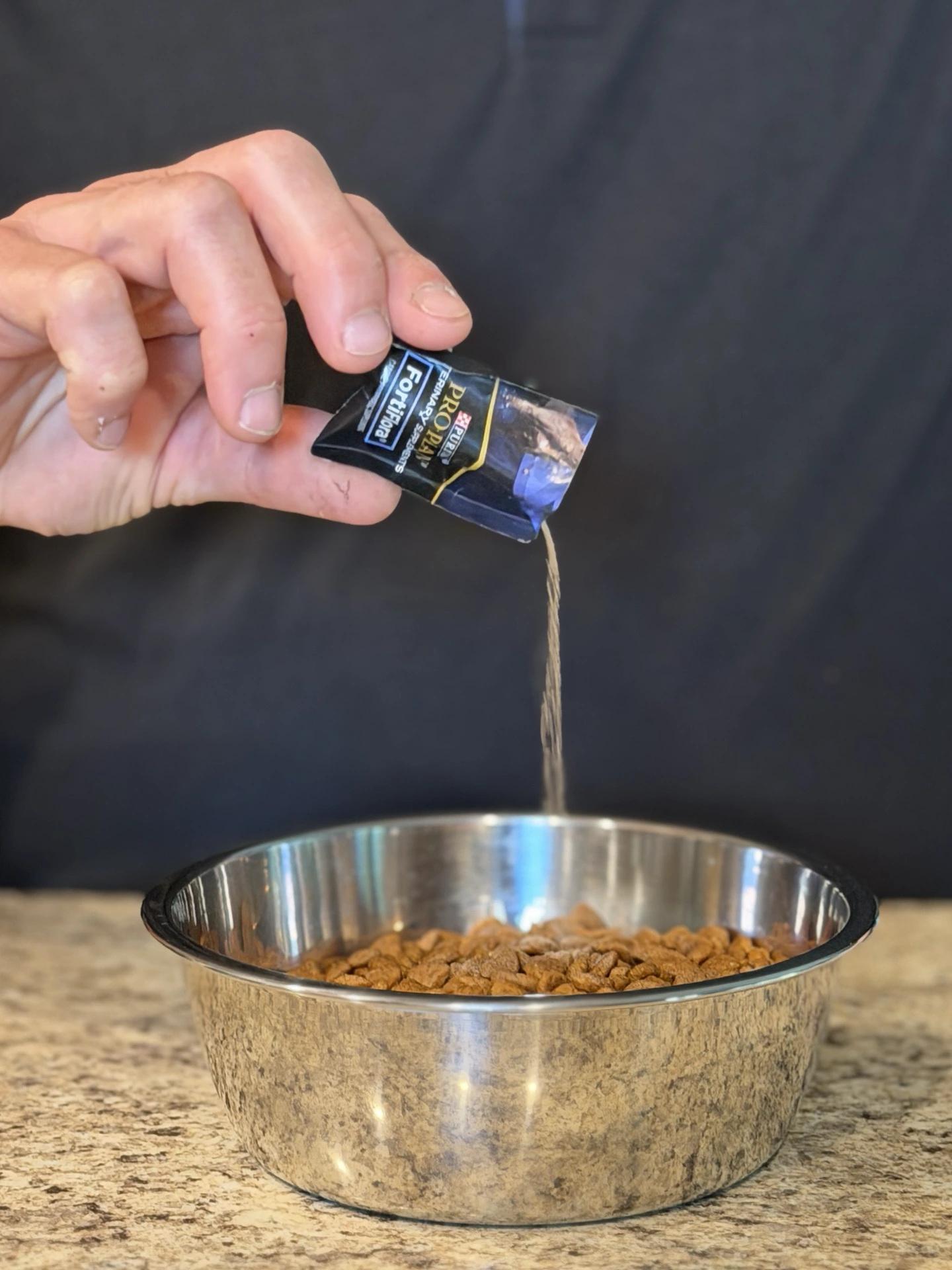
Don’t panic if your dog has diarrhea. It’s common, especially in doodles, and most of the time you can solve it at home with a few simple steps.
If you’re asking what makes a good probiotic for your dog, the short answer is this: look for a canine-specific product with proven strains, a guaranteed CFU count, and a third-party quality seal. But a probiotic is only one piece of keeping your dog’s gut healthy. Here’s how I think about all of it, after years of raising puppies.
What are probiotics?
Probiotics are live microorganisms, such as bacteria and yeasts, that provide health benefits when consumed in adequate amounts. People often call them the good or helpful bacteria. They help balance your dog’s gut microbiome by fighting off harmful bacteria, aiding digestion, and supporting the immune system.
Can I give them with regular food?
Yes. You can give a probiotic right alongside your dog’s regular food. You don’t need to change the diet to add one in.
What we do here at FRD
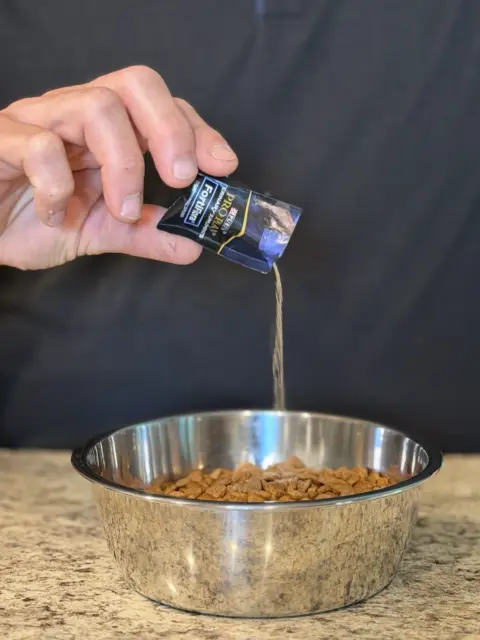
We give our puppies a probiotic, and we usually start the moms on it about the last couple of weeks before they whelp, then keep them on it through the whole nursing period. It’s part of our routine, not something we reach for only when there’s a problem.
Side affects of probiotics
Probiotics are generally safe. They can cause mild, temporary side effects like gas, bloating, or diarrhea as your dog’s digestive system adjusts. In rare cases, a dog with severe immune issues or one on prescription medication may have an allergic reaction or an interaction. But typically there are no issues.
How do I know if my dog has a sensitive stomach?
The first sign we usually notice is soft stool or diarrhea.
Here’s the part people miss, though: don’t assume soft stool automatically means a sensitive stomach. Stress does it too. Moving to a new home, getting adopted, a big change in routine, all of that can upset a dog’s stomach.
That’s why we send a tube of probiotic home with every puppy. I tell new owners not to freak out if their puppy has soft stool or diarrhea the first few days. There’s a good chance it’s just the stress of the move. In a case like that, it’s genuinely hard to tell a sensitive stomach apart from a stressed one, so give it a little time before you start worrying.
Some doodles are more prone to it
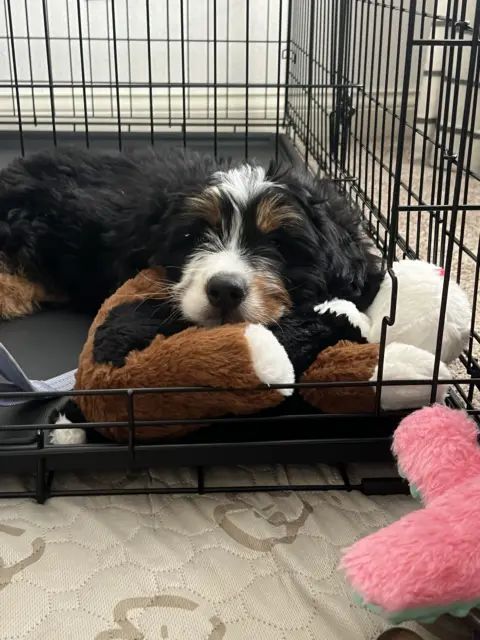
Certain doodle breeds do tend to have more stomach issues than others. Goldendoodles, Labradoodles, and Bernedoodles are three of the most likely to deal with them.
What should I do?
Before you change foods, try everything else first. Switching food should be near the bottom of the list, not the top.
Here’s the order I work through:
- Probiotics. Start here. They can help with diarrhea, gas, and inconsistent stools, though they won’t always solve it on their own.
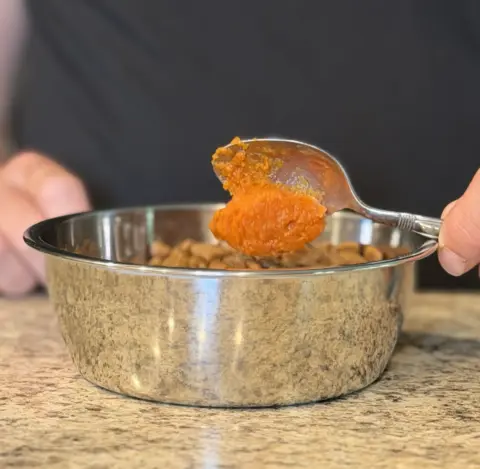
- Pure pumpkin. Put a little pure pumpkin on the food. Sometimes that alone settles things.
- A bland diet. If pumpkin doesn’t do it, go to a bland diet for a few days. That’s boiled rice with chicken, or rice with hamburger, or salmon. Some people add a little cottage cheese. This should firm the stools back up.
- Reintroduce the food slowly. Once you’ve had a couple of days of solid stools, slowly mix the regular food back in while keeping the bland diet going, and gradually work back to the full kibble.
- Then, and only then, consider a different food. If the diarrhea comes back once your dog is fully back on its kibble, that’s when it’s probably time to try a different food.
When stomach issues show up with one of my own puppies, the very first thing I do is pumpkin on top of the food, because it’s the easiest. If that works, great. If it doesn’t, I move to the bland diet.
How to choose a good probiotic
What to look for
When you’re choosing a probiotic for your dog, look for:
- Canine-specific bacterial strains
- A guaranteed CFU count of 1 to 10 billion
- A clearly stated expiration date
- A third-party quality stamp, like the National Animal Supplement Council (NASC) seal, which helps confirm the label is accurate
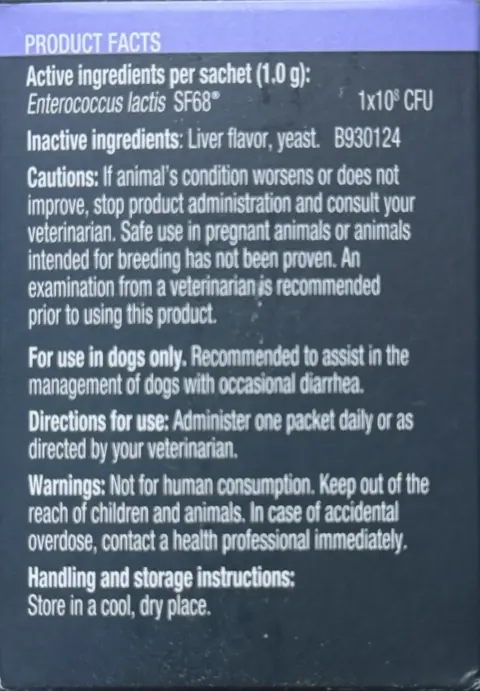
The strains matter more than the general ingredients or the marketing on the front of the bag. A dog’s gut microbiome is naturally different from a human’s, so species-specific strains and the right delivery method are what determine whether the supplement survives stomach acid and actually does anything.
Does a higher price mean a better probiotic?
No. A higher price doesn’t make a product better. What matters is proven ingredients, clinical backing, and how well it fits your dog’s specific needs.
Chewable, powder, or capsule?
I’d lean toward a chewable. Not because it works better than the other forms, but because dogs usually like them, and you can hand it over like a treat.
Can I just use a human probiotic?
No. You shouldn’t use human probiotics on dogs. Their gut environment, acid levels, and microbial needs are fundamentally different from ours.
The probiotics we actually use
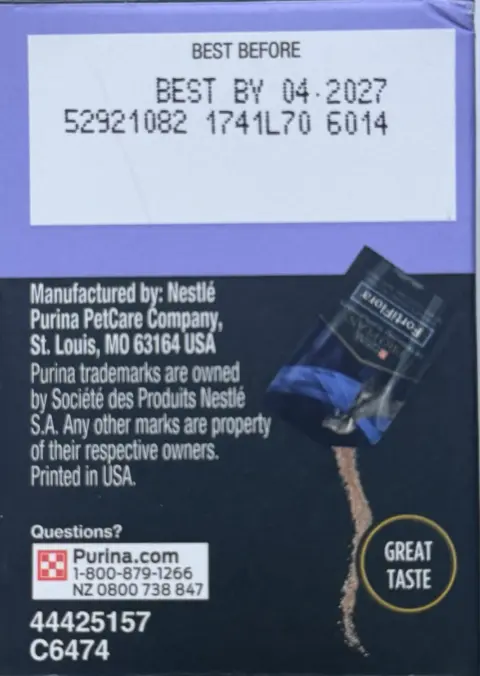
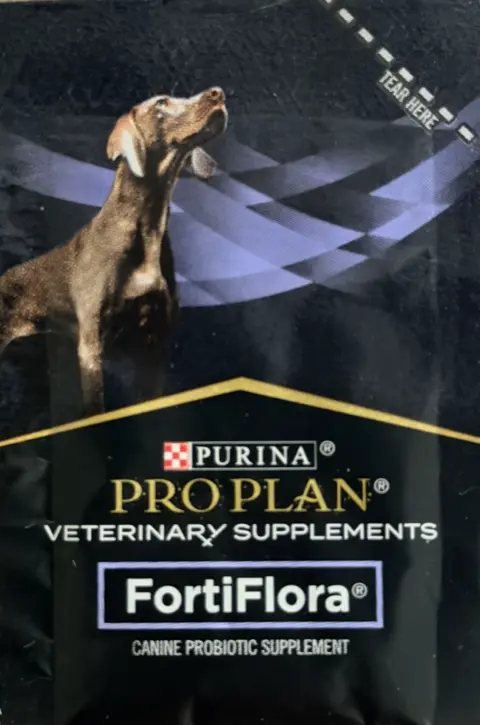
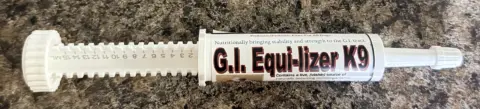
I’ll only recommend what I’ve used myself, and in our kennel that’s two products. Both have worked well, and they’re really the only two I can speak to from experience:
There’s also a product called Bernie’s Perfect Poo. It’s got a Bernese Mountain Dog on the bag. I haven’t used it personally, but I’ve heard good things and have pointed people toward it.
Do healthy dogs need probiotics too?
Yes, there’s a real benefit even if your dog doesn’t have a sensitive stomach. A dog’s gut houses roughly 70% of its entire immune system, so a balanced microbiome supports your dog’s overall wellness, not just its stool.
How long until I see results?
You should notice a difference within a few days, usually less loose stool.
Daily, or only during flare-ups?
Daily. I recommend keeping your dog on a probiotic regularly rather than only pulling it out when there’s a problem.
The biggest mistake I see
Waiting too long.
The most common mistake I see is owners not being proactive quickly enough. The puppy with giardia I mentioned earlier is the perfect example. By the time I learned it had been struggling for months, it had been on antibiotic after antibiotic, and I believe all that medication ended up damaging its gut more than the original problem did.
Now, I’m not saying to panic the moment your puppy comes home with loose stool, because that’s usually just stress. But if it’s a month later and your dog is still having diarrhea, don’t keep waiting. Start a bland diet right away. If the bland diet doesn’t help, that’s your cue to get a vet’s recommendation. The goal is to figure it out before the gut gets damaged, not after.
If you remember one thing
Don’t panic if your dog has diarrhea. It’s common, especially in Bernedoodles and Goldendoodles, and it’s usually fixable at home.
Start with pumpkin or a bland diet, give your dog a good probiotic every day, and consult your vet if it doesn’t resolve. Being calm and proactive beats waiting and worrying every time.