

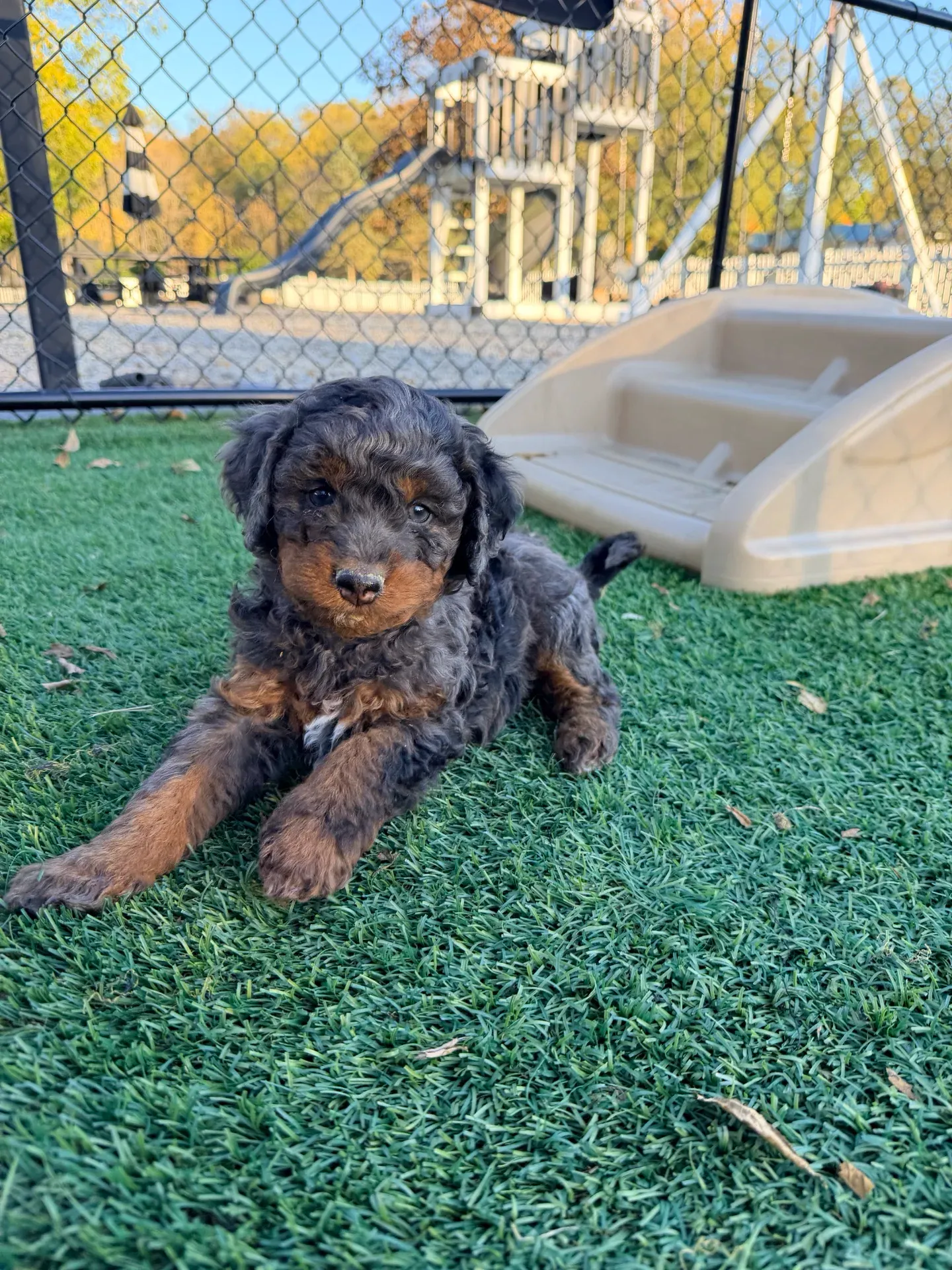
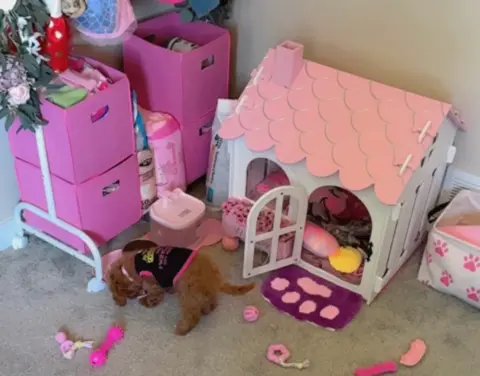
One family from Colorado had everything ready before pickup day. Her crate didn’t even look like a crate. It looked like a little kid’s dollhouse, and she had a closet full of clothes for her puppy.
I’ve been raising Bernedoodle and Goldendoodle puppies for over 10 years, and families ask me all the time how to get their house ready. So here’s what I tell them.
Puppy proof your house
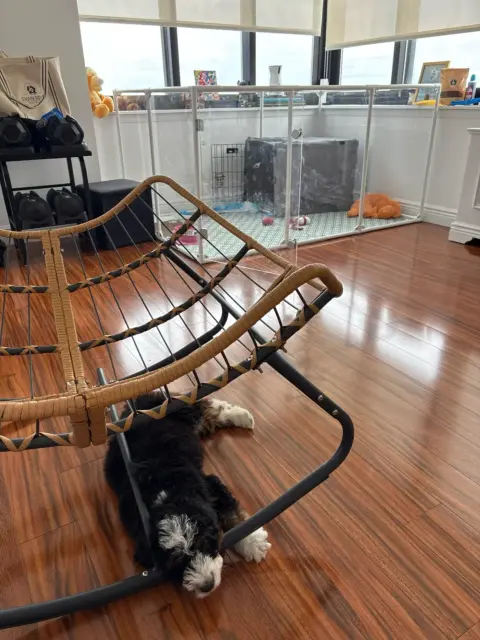
The first things I tell families to do:
- Put all shoes and socks away and out of sight.
- Set up a playpen with an open door crate inside.
- Block off one room of the house where someone will always see them.
What puppies get into the most
Socks, or anything similar to that. Anything clothy looking.
Shoes, trash cans, and anything on the floor should all be put away and out of sight.
Cords can’t always be put away, so just make them as hidden as possible. Tuck them under something. Puppies would chew on cords too if they see them and get a chance.
Plants and cleaning products
Plants are something they would love to chew on. Move them out for the first while.
Cleaning products should be behind closed doors where they can’t get to them. Depending on what it is, a bottle of something might not be as attractive to them. Keep it behind closed doors anyway.
The rooms that need the most work
- Kids’ bedrooms
- Any toy room
Before the puppy comes home, tell your kids they need to put all their stuff away. No shoes, socks, or toys left out.
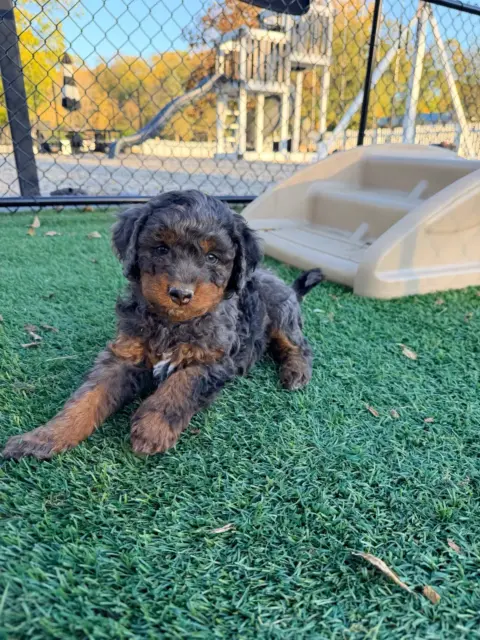
Set up the crate and playpen
The crate should definitely be set up before pickup day.
Where the crate and playpen go
- During the day: in the main room where you’re going to see them a majority of the time.
- At night: in your bedroom, or in an opposite room close enough to your bedroom where you’re going to hear them.
Some pups seem to do better in the same room, and some seem to do better in an opposite room. Some of them, if they can see you, want to be with you, so they’ll just cry. Some of them are fine.
For alone time and naps, I’d put them in a quiet room.
What goes in the crate
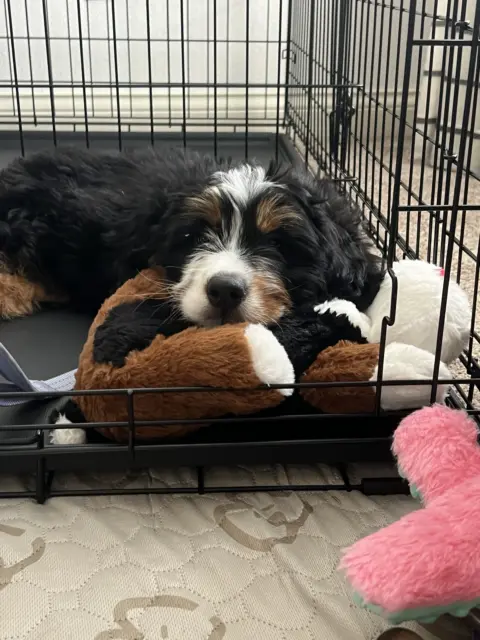
- Toys
- The snuggle puppy (that’s the one we send home with the heartbeat in it)
- The food bowl, on certain occasions
I wouldn’t recommend the food bowl all the time. But right at first, if you’re trying to get them to want to go in there, a food bowl with food is a good thing to entice them. It teaches them the crate is a good place, not a place of punishment.
I’d do that during the day when they’re in there for short periods. I would not recommend it at nighttime.
A lot of people will put a playpen up with an open door crate inside the playpen. Just make it a nice big fun area for them.
How much of the house they get
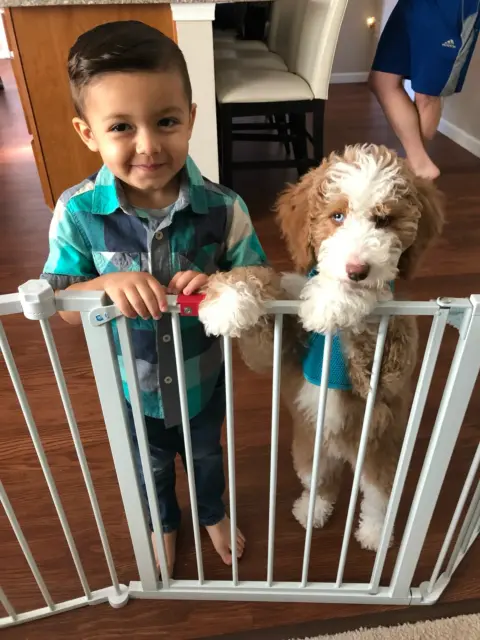
Really just one room. If that’s possible, that would be the best. Preferably a room without furniture, where you can see them almost all the time.
As they start progressing with potty training, you can slowly give them more freedom in the house.
To block off a room, I would recommend baby gates. They work good.
Make a plan before the puppy comes home
Make a plan and a schedule for the pup. That includes nice amounts of alone time and plenty of naps. They can get a little crazy and wild if they’re not getting enough sleep.
Potty breaks
During the day, take them out to potty every one to two hours to start out. While you’re doing that, teach them a method to let you know they need to go.
At nighttime, once you put them in the crate and they fall asleep, just let them sleep. Don’t wake them up to go out. They’ll wake up at some point and let you know.
If you both work
If you both work away from home, one of you or a friend should come check on the pup at least one time during the day to start. Around lunchtime is good. Let them go out and potty, and make sure they’re doing okay.
- If one of you works or lives close enough, go home and check on them.
- If you can’t, see if there’s a friend who could come check on them.
If you’re both gone eight or nine hours, definitely don’t leave the pup alone the whole time to start out. They should be getting checked on at least once or twice. Twice would be good.
Pick a potty spot
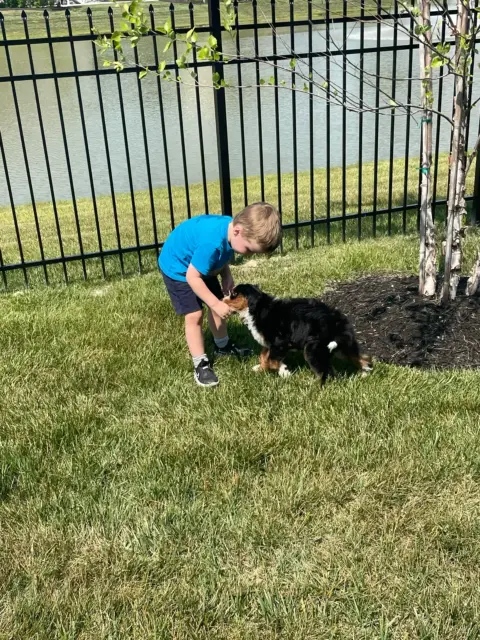
I would pick a potty spot before pickup day.
If you have a backyard, that would be best. If you have a fenced-in area, maybe teach them to go to the back part of it.
If you live in an apartment
We’ve had people who have to go several floors down just to take them out. That can be a pain, but they do it.
- Some apartments have a little fenced area for dogs. Be careful with that. If there are a lot of other dogs in there, you don’t want to take them there right away.
- If you have an outside deck, a lot of people in high rise apartments put a piece of artificial turf out on the deck.
- If you don’t have a deck, take them downstairs, go outside, and find a spot somewhere.
People ask me if it’s okay to pee pad train in a case like that. I would not pee pad train. If you do, they might see a floor rug in the house and think that’s a place they can go.
Book a vet visit
Yes, book it before pickup day. Our contract says you’re supposed to have a vet visit within five days.
People often ask, “What if I can’t get in?” It’s fine if it’s a few days over.
What to bring on pickup day
- Towels or pee pads. This is the biggest thing. Puppies might get motion sickness and throw up on the ride home.
- A collar and leash, if you want. But with an eight- or nine-week-old puppy, it’s probably going to be easier to just carry it.
- A crate, if you want. But I always tell families the puppy’s probably going to be happier sitting on someone’s lap, or on the floor beside them.
What’s in our going home kit
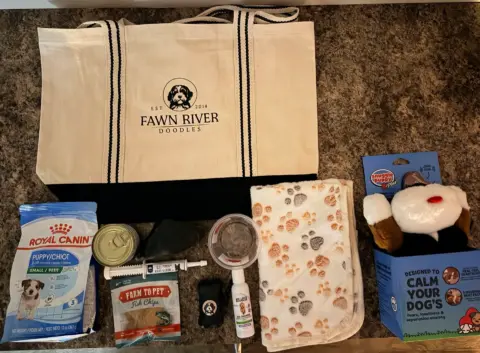
- A little bag of food
- A can of food
- A little bag of treats
- The snuggle puppy
- A blanket
- A chew toy (we do the cow hoof)
- A little plastic dispenser with poop bags in it
- A tube of probiotic
- A small sample bottle of shampoo, with a discount if you want to buy more
The car ride home

Your puppy is probably going to fall asleep on the way home. So there’s really no need to take them out.
If it’s a six-hour ride, you might want to stop one time and take them out. Just be careful where you take them out. An eight-week-old puppy is susceptible, so stay away from high-traffic areas where other dogs have been. Go off in an area where you wouldn’t think other dogs have been.
Otherwise, I encourage not taking them outside or walking them around.
What to do first when you get home
- Put your puppy in the one room you have blocked off.
- Let it explore for a little bit, maybe 30 minutes to an hour.
- Take it outside, but don’t give it very long at all.
- Put it in the crate for 30 minutes to an hour.
In closing
It takes time. You can’t expect to get home and have everything be fine the first night.
If the first few weeks get hard, the best option would be taking your puppy to a trainer for a couple weeks, if that’s a possibility. And you can call or text me any time at 574-596-0350 with questions. I love helping families and their puppies.