

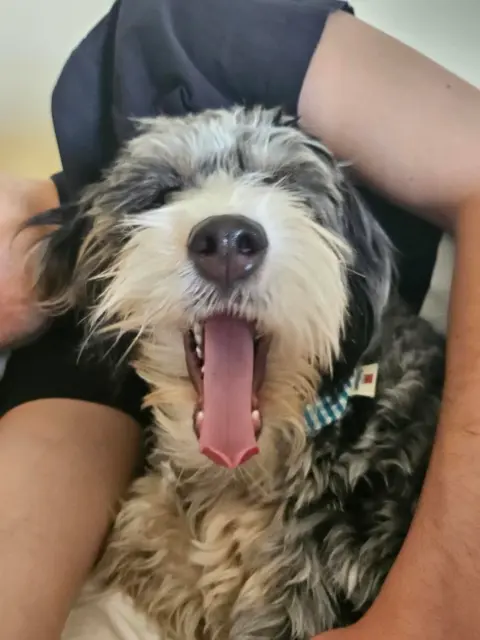
Did you know that when a dog yawns during a meeting, it’s usually not because they are tired? It is actually a major sign of stress, and knowing these small cues can be the difference between a fight and a friendship.
How to Set the Stage for a Successful Meeting
The best way to introduce a new puppy to your older dog is to keep things controlled and quiet. I always recommend doing the first meeting in the yard on a leash. By having both dogs on leashes in a large, quiet area, you can manage their movements easily.
Keep treats available so you can reward them immediately for good behavior. Taking it slow is the most important thing you can do.
How to Prepare Before the Puppy Arrives
You can actually start the introduction process several days before the puppy even steps foot in your house.
- Scent swapping
- Exchange items like blankets or toys between the puppy and your older dog so they get used to each other’s smell.
- Remove high-value items
- Pick up any favorite toys or bones that the older dog might feel the need to guard.
- Use calming aids
Common Mistakes to Avoid
Bringing a new puppy home is exciting, but I see owners make the same few mistakes quite often.
- Forcing the dogs to interact immediately
- Failing to supervise them at all times
- Not providing separate, safe spaces for each dog
- Ignoring the resident dog or letting the puppy overstep boundaries
Understanding Dog Dynamics
An older dog is likely to be a bit more lazy or grumpy if a puppy starts jumping all over them. A younger resident dog might jump right in and play, but a senior dog needs more patience.
If your older dog is a senior, the puppy’s energy might be a lot for them. They will be just fine as long as you give them time alone and separate them when the older dog needs a break.
Signs Your Dogs Are Comfortable
- Wagging tails
- Smiling expressions
- Play bows (when the front end is down and the hind end is up)
Signs of Stress to Watch For
- Whale eyes (showing the whites of their eyes)
- Stiff bodies
- Growling
- Yawning
I see yawning a lot during temperament tests. If a puppy or dog yawns during a new experience, they are feeling stressed.
Step-by-Step for the First Interaction
When you finally bring the puppy home, don’t just let them loose. Walk them up to each other slowly on their leashes. You need to be right there beside them because it is hard to know how an older dog will respond to a high-energy puppy right off the bat.
I tell people to give the adjustment period at least a couple of weeks. It might happen faster, but don’t be discouraged if it takes time.
Does Breed or Size Matter?
In my experience, breed doesn’t matter much. It really comes down to individual personalities and energy levels.
I’ve seen families with 80 or 100-pound dogs bring home mini bernedoodles, and they get along great. Size isn’t an issue as long as you manage the energy.
Doodles like Goldendoodles and Bernedoodles are generally great at adapting to multi-dog homes because of their social and gentle temperaments.

How to Build Long-Term Harmony
To keep the peace in your house, you need to establish clear boundaries and routines for both dogs.
- Use the “place” command
- Train both dogs to go to a specific mat, bed, or crate and stay there. This helps you manage them during busy times.
- Reward calmness
- Don’t just reward them when they are playing. Give them treats when they are simply existing peacefully in the same room.
- Use physical barriers
- Baby gates and exercise pens are great for giving each dog their own space.
- Practice parallel activities
- Walk the dogs together in a neutral area. This lets them get used to each other’s presence without the pressure of a face-to-face encounter.
- Short greetings
- Keep initial interactions to just three to five seconds before separating them to keep the experience positive.
The Most Important Factor: Your Energy
Dogs are very in tune with human stress. I’ve noticed that when a puppy is transitioning to a new home, if the family is stressed, the dog always has more issues.
Whenever a family calls me with an issue about their dog being a mess, 90% of the time, it is actually the family that is stressed. I don’t always tell them that, but it’s true. If you stay calm and collective, your dogs are much more likely to stay calm too.
In closing
I would just say don’t force interaction and just let it come naturally. Don’t stress about it the more you are stressed the more the dogs are stressed.