

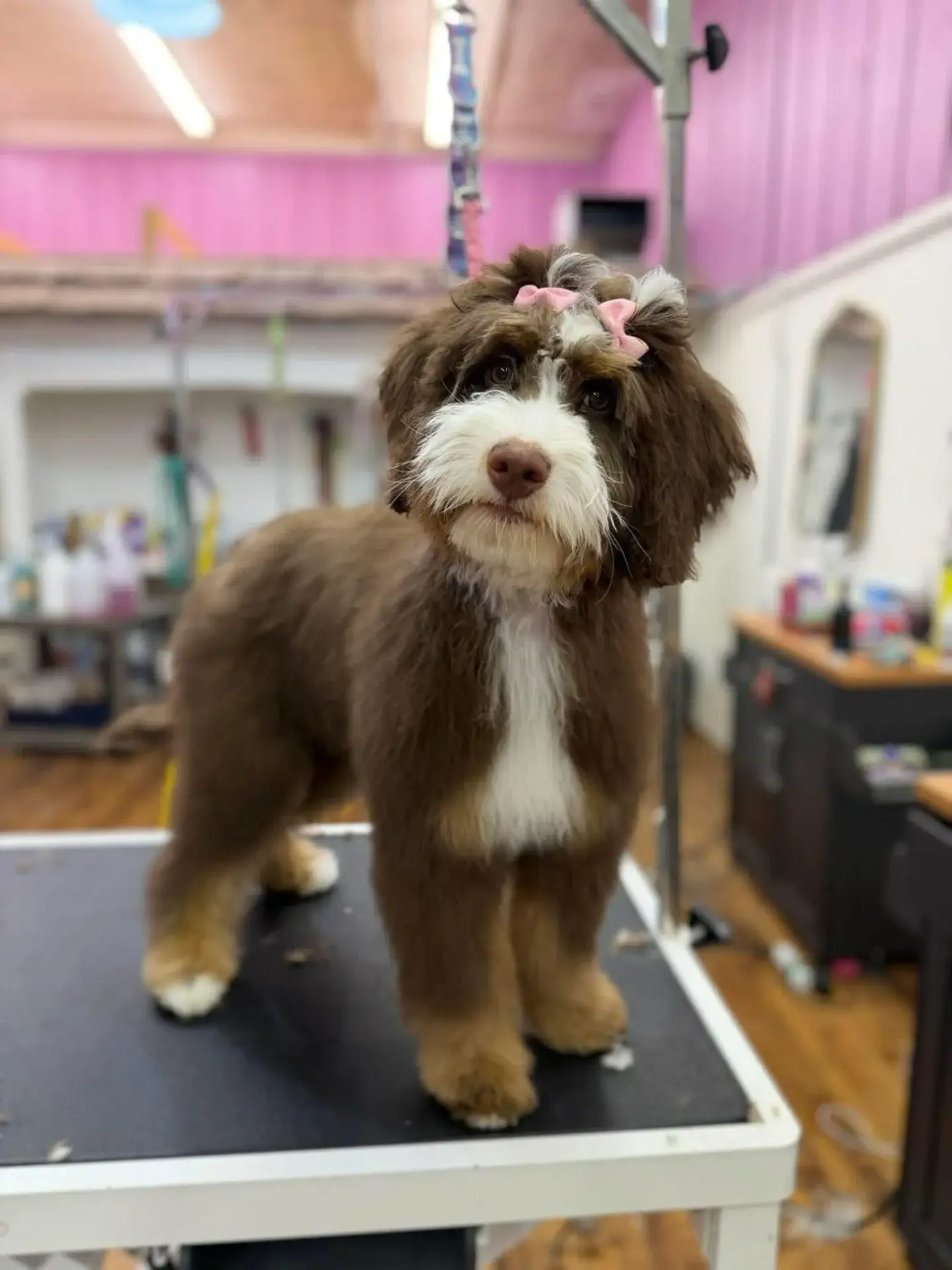
How often you bathe your Bernedoodle doesn’t change by age or coat type. It depends on how much they’re outside.
One time a month is good. Maybe a little more often is okay, but you don’t want to do it too often.
A lot of people ask me this, especially if they’ve had a German Shepherd before and now have a Bernedoodle. Bathing a Bernedoodle is different, and so is the brushing that goes with it.
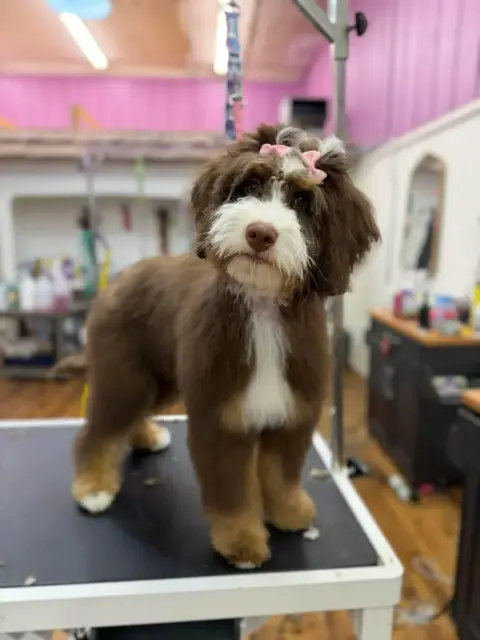
What changes how often you bathe
If they’re outside a lot, they’re going to get dirtier quick. Especially if it’s wet and there’s mud puddles.
Can you bathe a Bernedoodle too often?
Yeah, you can. Too often can cause dry skin or other types of skin irritations.
Signs it’s time for a bath
Even if it hasn’t been a month, here’s what to watch for:
- Unusual smell: A lingering musky odor means dirt, oils, or bacteria have built up in the coat.
- Visible dirt or grime: Mud, dust, and debris from playing outside.
- Greasy or sticky fur: The fur feels heavy or greasy to the touch. Natural oils and grime have formed a layer on the skin.
- Scratching or itching: Frequent scratching or rubbing can mean allergens like pollen or dust are trapped in your dog’s hair.
- Matting or heavy shedding: Trapped dirt in the loose hair can cause minor mats and tangles that a good wash and brush can fix.
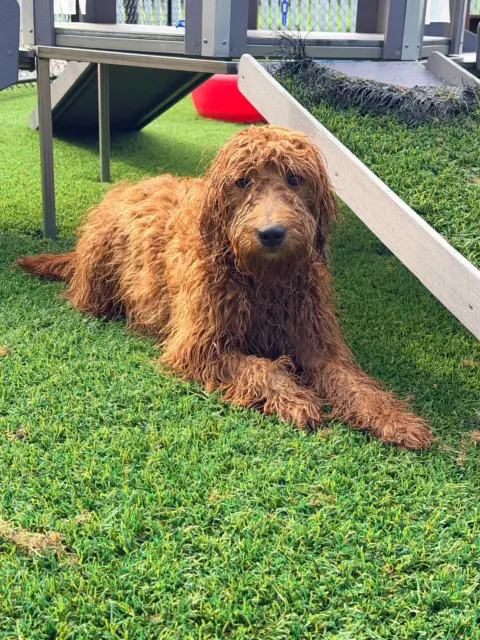
What other owners do
I was looking through a Facebook thread where Bernedoodle owners talked about how often they bathe. The frequency varied a lot:
- Some people bathe once a month.
- Some bathe every two weeks.
- Some are actually doing it every week.
I would definitely say every week is too much.
I also noticed some owners do a full bath once a month, and then just bathe the legs and feet in between. That’s where you’re going to get the most dirt anyway. That’s something I’d never really thought of, but it would be a good idea to do.
Bathing vs. grooming
If you’re grooming every six to eight weeks, they’re going to get a bath at the groomer already.
A lot of people on that Facebook thread said they let the groomer bathe them, and then they do one bath in between grooming appointments. That’s probably a good idea.
Bernedoodle vs. German Shepherd coat care
If you’ve only owned a shedding breed like a German Shepherd, the biggest shift is brushing and grooming.
Grooming takes place every six to eight weeks on average. But the brushing is the biggest difference. You’ll usually use a totally different style of brush, and there’s much more brushing to do than with a German Shepherd. The more you brush your Bernedoodle, then the less you need to take them for a groom.
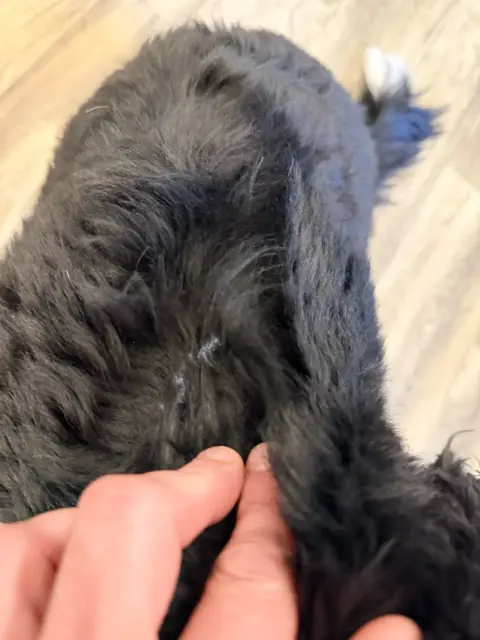
Here’s how the two compare:
Coat
Bernedoodles have a single layer of continuously growing hair. German Shepherds have a double coat of fur.
Matting
Bernedoodle hair traps loose hair and dirt. That creates severe mats close to the skin if they’re not washed and brushed regularly. German Shepherd fur doesn’t mat easily. It sheds out in large clumps.
Bathing
Bernedoodles need a bath about once a month to keep dirt from tangling into mats. German Shepherds only need a bath every two to three months. Bathing them too often strips away the natural oils that keep their skin weather resistant.
Drying
Bernedoodles must be blow dried completely while being brushed out. That keeps the curls from tangling and avoids trapping moisture. German Shepherds can air dry or be blown out with a high velocity dryer to remove dead undercoat.
Haircuts
Bernedoodles need professional haircuts every six to eight weeks to manage length. German Shepherds should never be shaved. Their double coat protects them from both heat and cold.
How to bathe your Bernedoodle at home
The most common mistake I see new Bernedoodle owners make is bathing them before brushing their mats and tangles out.
A thorough brush before the water touches their coat is the most critical step.
Before the bath
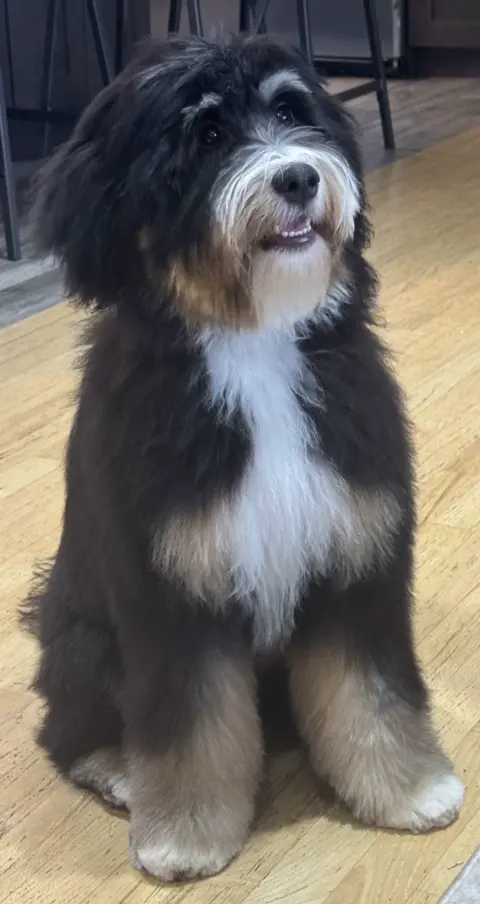
- Line brush. Section the hair and brush from the skin outward using a slicker brush.
- Check for mats. Run a metal greyhound comb through the coat to make sure no knots remain.
- Protect the ears. Put cotton balls in them to prevent infections.
Brushing first matters for two reasons:
- It keeps knots from tightening. Water shrinks and tightens existing tangles. Wet matted hair acts like a sponge. Wetting a matted Bernedoodle turns small knots into solid, felt-like mats that usually have to be shaved off.
- It removes loose hair. Brushing gets rid of dead, trapped hair, so your shampoo can actually reach the skin and clean it.
The wash
- Wet thoroughly. Use lukewarm water and saturate the thick coat down to the skin.
- Double shampoo. The first wash strips away heavy surface dirt. Rinse, then wash a second time to truly clean the skin.
- Let it soak. Once they’re all shampooed up, let them soak in the shampoo for about five minutes.
- Condition well. Apply a high quality dog conditioner to help detangle, restore moisture, and prevent future mats.
The rinse
Spend extra time rinsing the armpits, belly, and behind the ears.
Then check for soap. Squeeze the fur and make sure there’s no soap left. Leftover soap can cause skin irritation and itching.
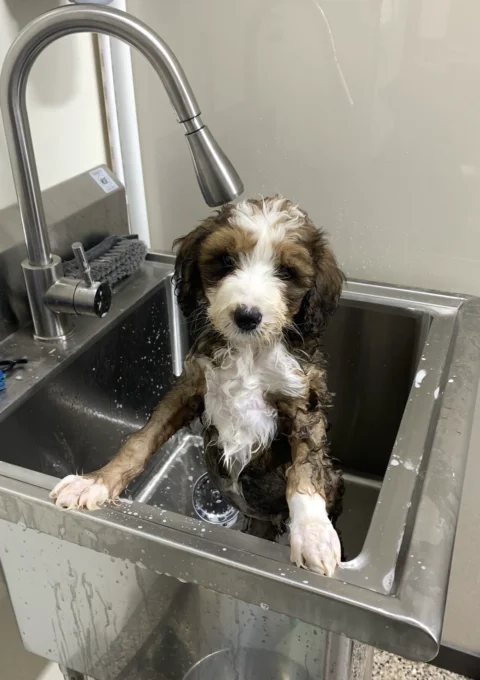
Drying and finishing
- Towel blot. Don’t rub with the towel. That creates tangles. Blot and squeeze the water out.
- Blow dry. Use a high velocity dryer, or a human hair dryer on a cool, low heat setting. Brush the hair with a slicker brush as you dry.
- Pull the cotton balls out of the ears.
Brushing while you dry straightens the curls. It keeps the hair separated and prevents new mats from forming as it dries.
If you let them air dry without brushing, the wet curls will shrink, clump together, and create tight tangles.
Making bath time easier
If handling a big dog in the tub is hard for you, tether them to a leash and give them a lick mat while you bathe them.
What to have on hand
A new owner needs these to safely manage a curly coat:
- A high quality long pin slicker brush
- A metal greyhound comb
- A detangling spray
- A soap-free dog shampoo
What not to use
- Human shampoo. Human skin has a completely different pH level than dog skin. Human shampoo strips your dog’s acid mantle and can cause severe dryness, open sores, and bacterial infections.
- Human hair conditioner. These can contain silicones or chemicals that are toxic if licked off and swallowed.
- A deshedding rake. It’s excellent for German Shepherds. But deshedding tools with sharp, tightly spaced blades will slice, fray, and permanently damage a Bernedoodle’s continuously growing hair.
- A human hair dryer on high heat. It’s hot enough to burn your dog’s skin. Only use a professional high velocity pet dryer, or a human dryer strictly on the cool setting.

Let the groomer do most of it
If you’re grooming every six to eight weeks, your Bernedoodle is already getting a bath at the groomer.
So let the groomer bathe them, and do one bath in between grooming appointments.
Grooming at home is way harder than bathing at home. There’s no reason to take that on yourself, unless you’ve had experience doing it or if you’re just really wanting to save some money.