

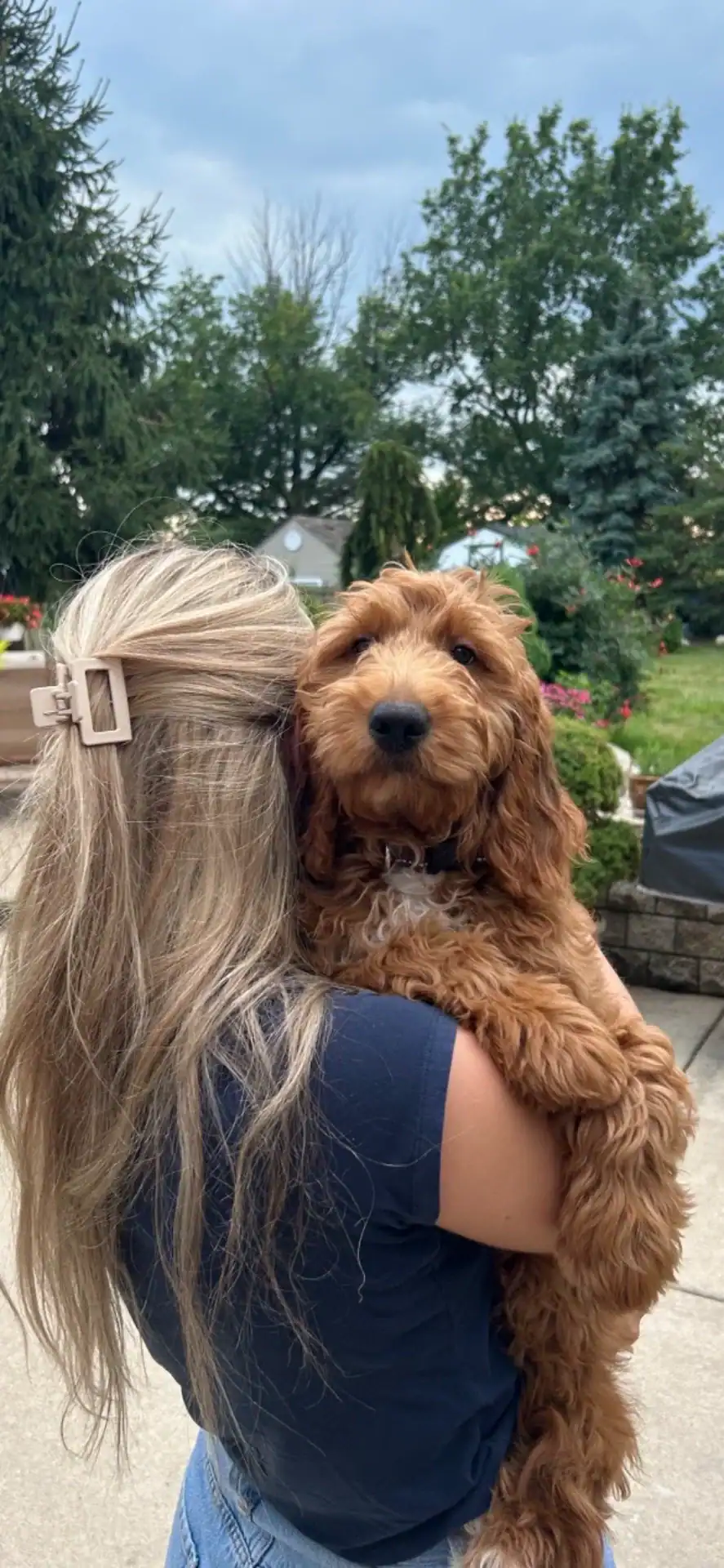
Did you know that some Goldendoodles look practically like Golden Retrievers—even in a litter full of shaggy, teddy bear-faced siblings? It all comes down to a tiny gene deciding “furnished” or “unfurnished”—and it could completely change your grooming routine.
What does “furnished” vs “unfurnished” actually mean?
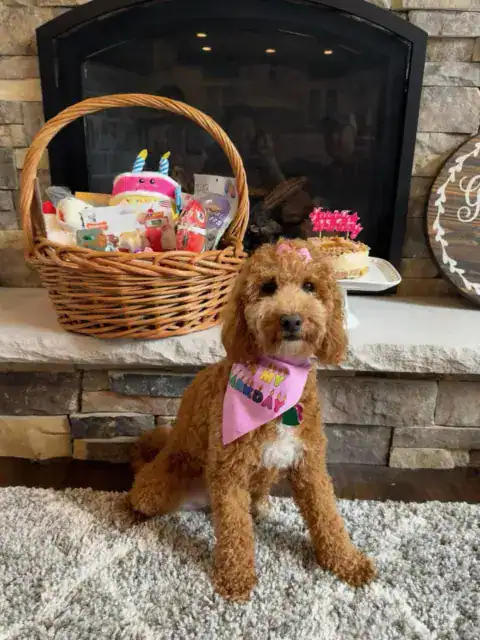
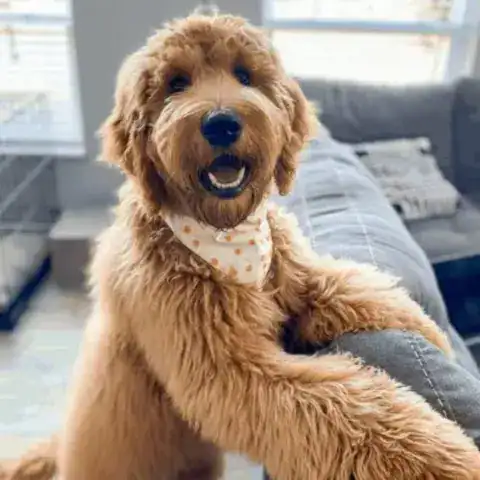
This is the number one question I get from people choosing their first Goldendoodle—and for good reason! A “furnished” Goldendoodle has the classic doodle “beard” and fluffy face you see all over the internet. Their legs are fuzzy, their face is shaggy, and they look nothing like a purebred golden retriever.
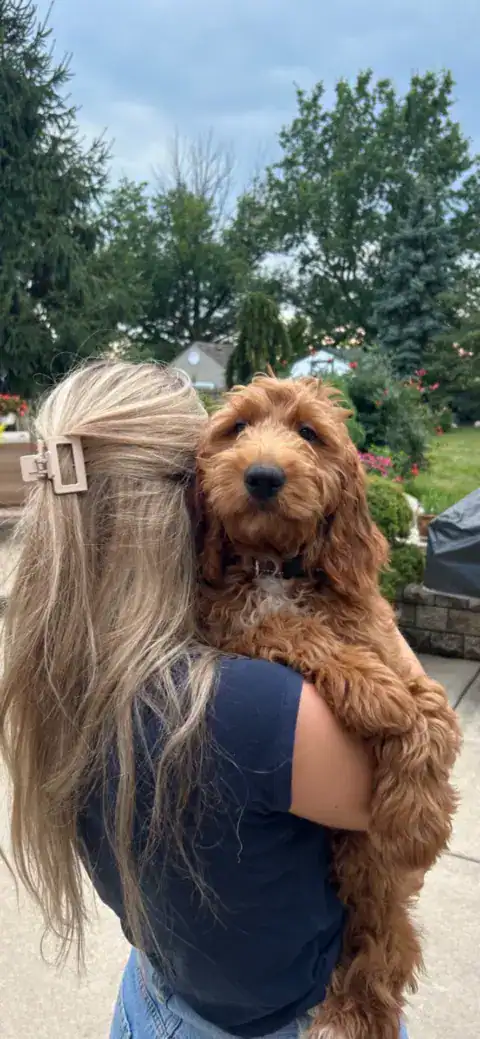
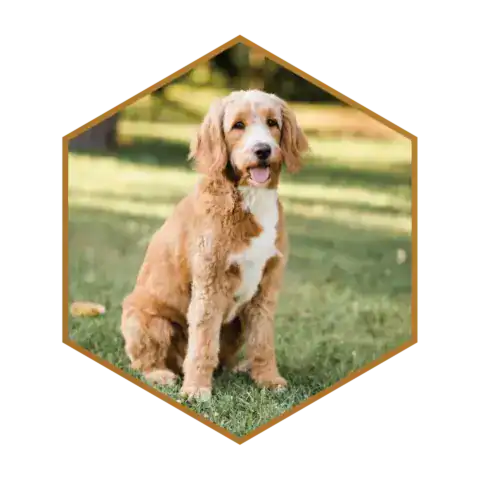
On the other hand, an “unfurnished” Goldendoodle will have a much shorter face and leg hair—more like a golden retriever. The rest of their body will fill in as they grow, but it’s rarely as full or plush as the “furnished” doodle look. And especially in the face and on the legs, you’ll notice that short, smooth coat.
When puppies are little, it can be tricky to tell which type they are. Usually by 5 or 6 weeks, I can tell if a puppy’s going to be furnished: the beard and fluffy face hair start filling in. Before that, it’s really hard—so don’t be surprised if your breeder says, “let’s wait a few weeks and see!”
Why do some Goldendoodles look so different?
It all comes down to genetics. The “furnished” or “unfurnished” look is determined by whether the pup inherited the “furnishing” gene from its parents. A purebred golden retriever always passes on “unfurnished” genes, while a purebred poodle will always pass on “furnished” genes. In the classic F1 Goldendoodles (golden retriever x poodle), the puppies are almost always furnished—so you get the teddy bear face every time.
Things get a little more interesting in multi-generational breedings, or if both parents carry a mix of these genes (for example, what we call FI—one furnished, one unfurnished gene). If both parents pass on the unfurnished side, you can get puppies that look more like a golden retriever, even though they’re Goldendoodles!
Most breeders do genetic testing to know exactly what “furnishing” genes each parent carries, especially when planning multi-generational litters. This ensures we can predict coat types and help match families with the look (and maintenance) they want.

Which coat type sheds less?
If you’re looking for less shedding, furnished Goldendoodles are usually the way to go. Unfurnished Goldendoodles will nearly always shed a little more, closer to a typical golden retriever. It won’t be severe, but if allergies or a clean house are important to you, furnished is typically best.
The story gets a tiny bit more complicated with generations: F1 Goldendoodles (the classic 50/50 cross) will usually shed a bit, but not nearly as much as a golden retriever. F1Bs and multigeneration doodles tend to shed even less like little to none.
Here’s the main myth I hear: some people think only curly coats are hypoallergenic or really low shedding. Not true! With multi-generational crosses, straight and wavy coats can be super low shedding too, depending on those shedding genes.
How does grooming compare?
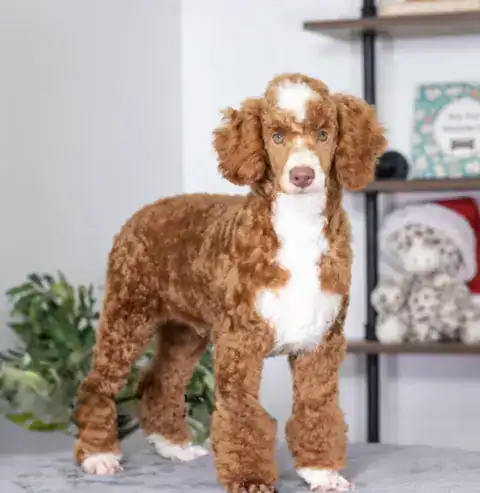
If easy grooming is at the top of your wish list—maybe you’re a bit older or just want less maintenance—unfurnished Goldendoodles are much simpler. They don’t need nearly as much brushing or trimming. You’ll still need to maintain their body and keep an eye out for knots, but it’s not nearly as involved as with a furnished doodle.
Furnished Goldendoodles, especially those with curly coats, need regular brushing and grooming to avoid mats and keep that plush look. If you don’t love frequent brushing (or trips to the groomer), keep that in mind. On the flip side, these coats shed much less and tend to be more “hypoallergenic.”
The curly coats (and especially curly furnished) are the highest maintenance. Straight and wavy coats are a little easier, but still need more upkeep than the unfurnished types.
Which coat is better for allergies?
If you or someone in your family has dog allergies, you’ll want to stick with furnished Goldendoodles—and ideally, the more poodle-heavy generations (like F1B or multi-generational). The unfurnished coats usually aren’t a good fit for allergy-sensitive homes.
A quick note: shedding and coat type are mostly about allergies, while curliness comes into play after that. Some curly coats are just as low-shedding as the straight or wavy variety, as long as they have the furnishings.
How common is each coat type?
Furnished Goldendoodles are by far the most common and most popular. Most families want the fluffy, classic doodle look—so breeders rarely get requests for unfurnished pups.
The only exceptions are sometimes people do want the “retriever look” in a doodle (for less grooming, for the nostalgia, or for personal reasons). But it’s rare, and when it happens, we’re happy to chat through options.
How do I choose the right coat type?
Start by honestly thinking about what matters most to you. If you want:
- The classic fluffy look, less shedding, and don’t mind regular grooming—go for a furnished Goldendoodle.
- Less maintenance, less grooming time, and you’re okay with a bit more shedding—an unfurnished Goldendoodle might be perfect.
- If you have allergies in the house—stick with furnished, especially an F1B or multi-gen.
When matching families and puppies at Fawn River Doodles, I always ask what look you like best. I’ll show you pictures of the different types and talk about what fits your lifestyle. If you want less maintenance, I can guide you to an unfurnished (if one’s available). If you’re after that classic doodle, furnished is the way to go.
And remember, grooming style can make a big difference in how a pup’s coat looks—even a curly coat can look straighter with lots of brushing and the right trim.
In closing
My biggest advice is to be honest with yourself about how much time and energy you want to spend on grooming. Either type makes a wonderful companion—as long as you choose the coat (and the pup) that matches YOUR lifestyle. And if you’re ever in doubt, just give me a call—I love helping new families pick the best match.